


 Return
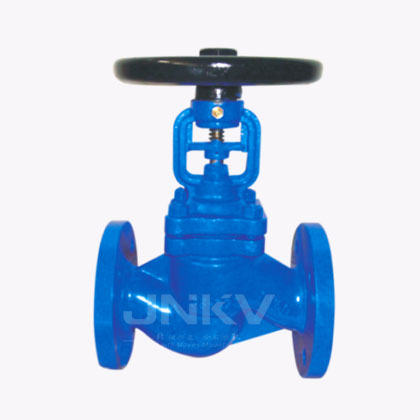

Bellows Globe Valve
Product Model: WJ41H
Nominal Diameter:
NPS 2"–NPS 24" / DN50–DN600
Pressure Range:
CL150–CL1500 / PN10–PN250
Working Temperature:
-196°C to +600°C
Body Material:
Carbon steel, Stainless steel, Alloy steel
Application:
Suitable for pipelines handling media such as chemicals, smelting, pharmaceuticals, power, heating, petroleum, liquefied gas, steam, flammable, explosive, heat transfer oil, high-purity, toxic, etc.Product Overview
The bellows globe valve adopts a bellows structure internally. The lower end of the stainless steel bellows is welded to the stem to prevent the process fluid from eroding the stem. The other end is placed between the valve body and the bonnet to form a static seal. It features a double sealing design: if the bellows fails, the stem packing will also prevent leakage. The bellows is welded to the stem to maintain stable operating performance and avoid stem vibration caused by plug vibration. It is suitable for pipelines handling media such as steam, flammable, explosive, heat transfer oil, high-purity, toxic, etc.Design Specifications
-
Design Standard: BS 1873, GB/T 12235, ASME B16.34
-
Face-to-Face Dimensions: ASME B16.10, GB/T 12221
-
Connection Standard: ASME B16.5, ASME B16.25, GB/T 9113, JB/T 79, HG/T 20592
-
Pressure Test: API 598, GB/T 13927, GB/T 26480, JB/T 9092
-
Pressure-Temperature Rating: ASME B16.34, GB/T 12224
Product Features
-
The bellows is made of 2 to 6 layers of overlapping stainless steel or Inconel material to prevent valve leakage due to single-layer damage of the bellows. The bellows sealing structure is reasonably designed, fatigue-resistant, and has a long service life.
-
The bellows is designed inside the bonnet cavity to avoid direct scouring by the medium and improve the service life of the bellows.
-
Double sealing design (bellows + packing): the bellows acts as the primary seal, and the packing acts as the auxiliary seal. If the bellows fails, the stem packing will also prevent leakage.
-
The lower end of the metal bellows used for stem sealing is welded to the stem, eliminating external leakage of the medium through the stem movement gap. The upper end is placed between the body and the bonnet to form a static seal with the gasket.
-
The valve is provided with a backseat structure for reliable sealing.
-
No external leakage, no fluid loss, improving equipment safety and providing a clean and safe working environment.
-

