


 Return
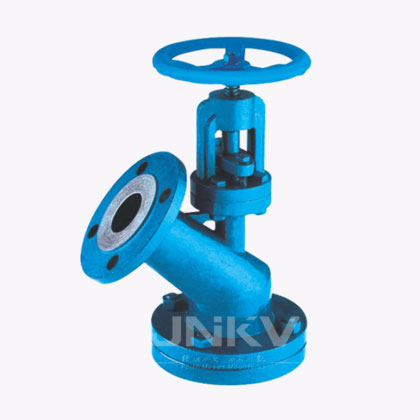

Under The Manual Type Feeding Valve
Product Model: HG5-81-2
Nominal Diameter:
DN50–150 mm
Nominal Pressure:
PN1.0–6.4 MPa
Applicable Temperature:
-29°C to 650°C
Main Materials:
WCB, ZG1Cr18Ni9Ti, ZG1Cr18Ni12Mo2Ti, CF8, CF8M, CF3, CF3MProduct Overview
The bottom discharge valve features a flat-bottom discharge structure designed to meet actual requirements, with a V-shaped valve body and a disc that offers two working modes: lifting and lowering. A scour-resistant and corrosion-resistant sealing ring is installed inside the valve cavity. At the moment of opening, it protects the valve body from being scoured and corroded by the medium. The sealing ring undergoes special treatment to achieve a surface hardness of HRC 56–62, providing high wear resistance and corrosion resistance. The sealing surfaces of the disc are hardfaced with hard alloy as required. The sealing pair adopts line sealing to ensure reliable sealing and prevent scarring (caking). Meanwhile, a short-stroke disc design is adopted. It is widely used in the chemical, petroleum, metallurgy, pharmaceutical, pesticide, dye, and food processing industries. Various operation modes are available, such as manual, pneumatic (spring-return, double-acting, with and without handwheel), electric, hydraulic, and gear operation.-
The bottom discharge valve is suitable for media such as water, acetone, alcohol, ammonia, barium carbonate, and benzene. (The minimum operating temperature for WCB material is -29°C, and the maximum is 425°C.)
-
For media such as particles, oil, pulp, carbon dioxide, and gas. (The minimum operating temperature for stainless steel material is -100°C, and the maximum is 232°C.)
-
It is strictly prohibited to use liquids containing fluoride ions (such as HF). Strong alkalis and phosphoric acid (temperature >150°C, concentration >30%) must also not be used.
Product Application
The bottom discharge valve series is mainly used for bottom discharge from reactors, storage tanks, and other vessels. By welding the bottom flange to the bottom of storage tanks and other vessels, it eliminates the phenomenon of process media usually remaining at the vessel outlet.-

